


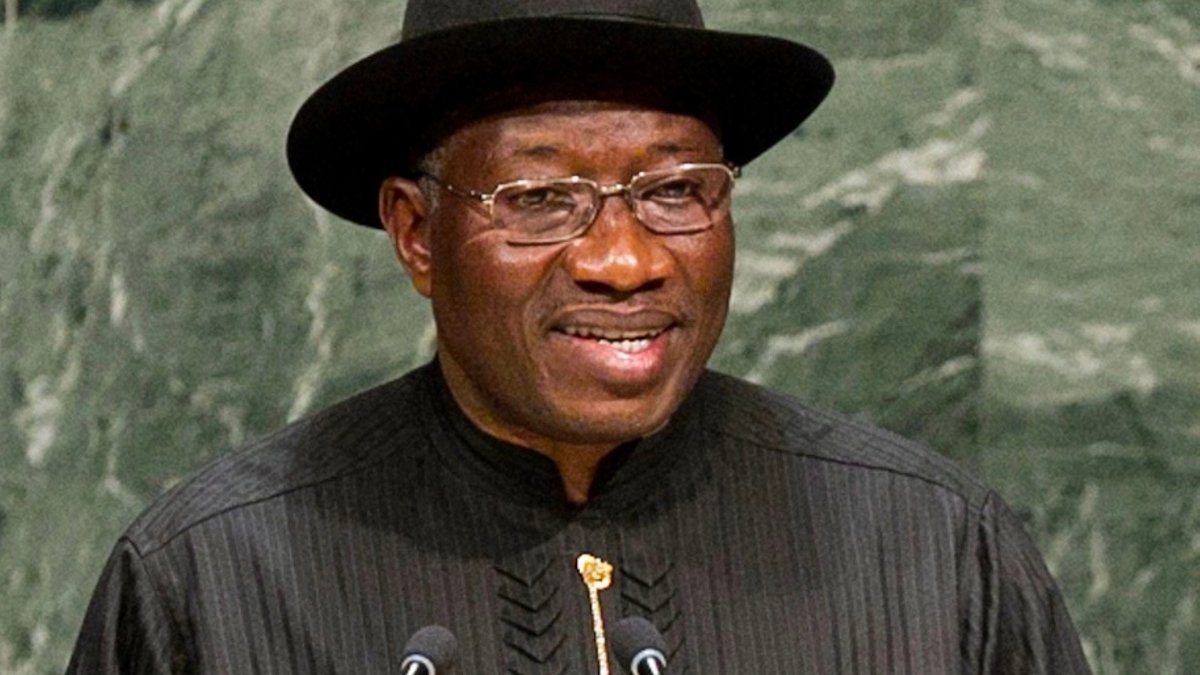
Nigeria is debating whether former President Goodluck Jonathan can run again in 2027, a move that has divided legal experts, politicians, and citizens. The controversy focuses on a constitutional amendment that may prevent his candidacy—and whether the country will overlook its own rules to allow his return.
The constitutional hurdle
The dispute centers on Section 137(3) of Nigeria’s 1999 Constitution, added in 2018. The clause prevents anyone who assumed the presidency to complete another leader’s term from being elected to more than one full term afterward. Jonathan took office in 2010 following President Umaru Yar’Adua’s death, then secured his own term in 2011.
Legal perspectives differ on whether the amendment applies to past cases. Human rights lawyer Chidi Odinkalu argues courts would likely reject any 2027 bid, noting the judiciary has evolved since Jonathan left office in 2015. Supporters, including his cousin and lawyer Robert Azibaola, maintain he remains eligible, citing previous rulings without specifying details.
Jonathan has not publicly addressed a potential run. His spokesperson denied he controls any Instagram accounts, distancing him from online speculation. The silence has only fueled more theories, allowing different groups to claim his support.
Northern Nigeria’s shift in stance
The strongest support for Jonathan’s return comes from the North, a region that once opposed him. Recent rallies in Maiduguri and Kano drew hundreds demanding his comeback, portraying him as a leader who could ease political tensions.
Governor Bala Mohammed of Bauchi State stated, “If we can persuade him to come forward, I will support him with my blood.” Such an endorsement would have been unimaginable nine years ago, when northern leaders backed Muhammadu Buhari’s successful challenge to Jonathan’s re-election.
Related: Nigeria’s 2027 Election Campaign Starts Early
The change reflects frustration with President Bola Tinubu’s economic policies and a belief that Jonathan’s single term—whether real or assumed—would return power to the North by 2031. The region’s backing follows violent protests over rising costs, which remained peaceful in the South but turned deadly in some northern states.
Some northern leaders view Jonathan as a safe choice: a familiar figure who could stabilize the country without threatening the North’s long-term political control. Others simply want an alternative to Tinubu, whose administration has faced criticism for fuel subsidy cuts and currency devaluation.
Social media’s influence on the debate
The Jonathan 2027 movement has gained traction online, where AI-generated images and viral posts shape opinions. Fake photos of Jonathan with Donald Trump, complete with fabricated quotes about his political plans, have spread across Facebook, Instagram, and X.
On TikTok and YouTube, creators have posted hundreds of videos analyzing his potential candidacy, using hashtags like #Jonathan2027 and #BringBackOurGoodluck. The content ranges from legal analysis to emotional appeals about Nigeria’s future. Most pro-Jonathan material originates in the North, marking a change from 2015.
Misinformation isn’t one-sided. Opponents have circulated edited clips of Jonathan’s speeches to make him appear indecisive. The back-and-forth shows how social media has become a battleground for Nigeria’s political future, with AI tools making it easier to manipulate public opinion.
If Jonathan runs, his path remains uncertain. The Peoples Democratic Party has already reserved its 2027 presidential ticket for the South, removing one barrier. But divisions persist. Minister Nyesom Wike warned that bringing back Jonathan—or Peter Obi, another former PDP member—could “create problems for the party.”
Related: Nigeria’s Top 25 Large‑Screen Phones 2025
The ruling All Progressives Congress dismissed the idea as political nostalgia. Lagos APC spokesperson Seye Oladejo called it a distraction, arguing that “legacies are not manifestoes.” He also suggested a Jonathan candidacy could trigger a constitutional crisis, though details remain unclear.
The international community is monitoring developments. Jonathan’s reputation as a democratic leader—he conceded defeat in 2015, a rare move in African politics—could strengthen any bid. His post-presidency work in conflict resolution and election monitoring has enhanced his global standing.
What happens next may depend more on political will than legal details. The constitutional questions are real, but so is the demand for change. If courts block Jonathan’s candidacy, it could set a precedent for future leaders. If they don’t, it might show that Nigeria’s democracy can bend its rules when convenient.
The debate has sparked difficult conversations about term limits, regional power-sharing, and whether democracy should prioritize strict legality or public demand. Those issues won’t disappear, even if Jonathan never runs. For now, the country watches as its political future unfolds in courtrooms, statehouses, and on smartphone screens.
Local banks are also feeling the pressure of economic shifts, as recapitalization efforts push lenders to meet new targets.


