


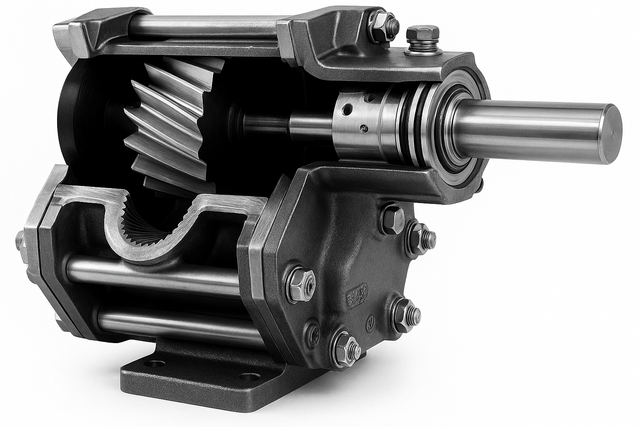
When fluid handling is a core part of your facility’s workflow, selecting the right equipment often comes down to balancing performance, durability, and maintenance requirements. The decision typically starts with an evaluation of the fluid being moved, the system’s pressure requirements, and the specific operating conditions of your workspace. Whether you are managing lubricating oils, viscous chemicals, or other specialized substances, the industrial gear pump you choose serves as the heartbeat of your system.
Understanding the Role of Positive Displacement Systems
In many mechanical applications, the primary goal is to ensure a constant, predictable flow of fluid, regardless of changes in pressure. This is where positive displacement technology shines. A gear pump functions by trapping a set volume of fluid between gear teeth and carrying it from the intake side to the discharge side of the casing. Because the internal tolerances are tight, this design is typically effective at creating the pressure needed to move viscous liquids over significant distances or through complex piping networks.
Compared to other pump types, this design tends to offer a smooth, pulse-free flow, which is often essential for processes involving sensitive materials or consistent dosing. These systems are generally favored in scenarios where fluid viscosity varies, as they can maintain efficiency even as the resistance within the pipes shifts. Understanding the basic mechanics of how these components move fluid is the first step in assessing whether this technology fits your specific needs.
Typical Considerations for Pump Selection and Integration
When you begin evaluating your options, several factors often come to the forefront. The most prominent of these is the nature of the fluid itself. Is the substance thin and watery, or is it thick and sludge-like? Gear pumps are often preferred for higher-viscosity fluids because their internal mechanisms can handle the resistance more effectively than centrifugal alternatives.
Another key consideration is the expected level of suction lift. If your system requires the pump to draw fluid from a source located below its own level, the self-priming capabilities of an industrial gear pump can be a significant advantage. Additionally, you should weigh the following factors:
- Operating Temperature: High temperatures can affect the integrity of seals and the fluid’s viscosity.
- Chemical Compatibility: The materials used to construct the pump casing and the internal gears must be able to withstand the chemical properties of the fluid being processed.
- Flow Rate Requirements: Different models are designed to handle varying volumes of output per revolution, making it vital to match the pump’s capacity with the downstream demands of your process.
Beyond the hardware itself, consider the environment in which the pump will live. A unit that operates in a clean, temperature-controlled environment will face different mechanical stresses than one exposed to extreme conditions or outdoor elements.
Factors That Influence Long-Term Reliability
The longevity of your equipment often depends on how well the chosen model matches the rigor of your operation. One of the most frequent mistakes in equipment procurement is selecting a pump that is pushed to the upper limits of its performance range on a constant basis. While these pumps are robust, running them at maximum speed and pressure continuously can accelerate the wear on internal components.
When discussing options with a provider, ask about the materials used in the gear construction—such as hardened steel or specialized alloys—as these significantly impact how the pump handles abrasive particles. You should also consider the configuration of the shaft seals. Depending on the substance being pumped, certain seal materials might provide better leak prevention and lower maintenance requirements over time. A common practice for those looking to maximize their return on investment is to implement a regular inspection schedule that focuses on lubrication and seal health, which are typically the first areas to show signs of stress.
Aligning Equipment Choices With Specific Operational Goals
The final decision should be driven by the specific demands of your facility. Are you looking to minimize energy consumption, or is the highest possible uptime the most important priority? Sometimes, the most efficient solution involves a trade-off. For instance, a pump designed for extreme precision might require more frequent maintenance than a heavier-duty, “workhorse” model designed for continuous, high-volume flow.
As you navigate the process of finding the right industrial gear pumps, approach the search with questions rather than assumptions. Ask providers about their experience with your specific fluid type and what common failure points they see in similar environments. Evaluate whether a modular design—which allows for easier replacement of specific parts—would be more beneficial for your maintenance team than a sealed, single-unit design.
Alignment also means looking at your broader system. A high-performance pump will struggle if the surrounding piping is undersized or if the filtration system is inadequate. When you take the time to look at the entire loop—from the intake source to the final delivery point—you are better positioned to select a pump that integrates seamlessly into your infrastructure.
The right equipment choice is rarely about finding a single “best” model, but rather identifying the unit that aligns most closely with your operational load, maintenance capabilities, and performance requirements. By focusing on the structural and mechanical variables that directly impact your daily workflow, you can select an industrial gear pump that supports your facility’s needs reliably and consistently. When you prioritize informed, methodical selection, you build a foundation for long-term operational success that avoids unnecessary downtime and keeps your processes moving as intended.


