


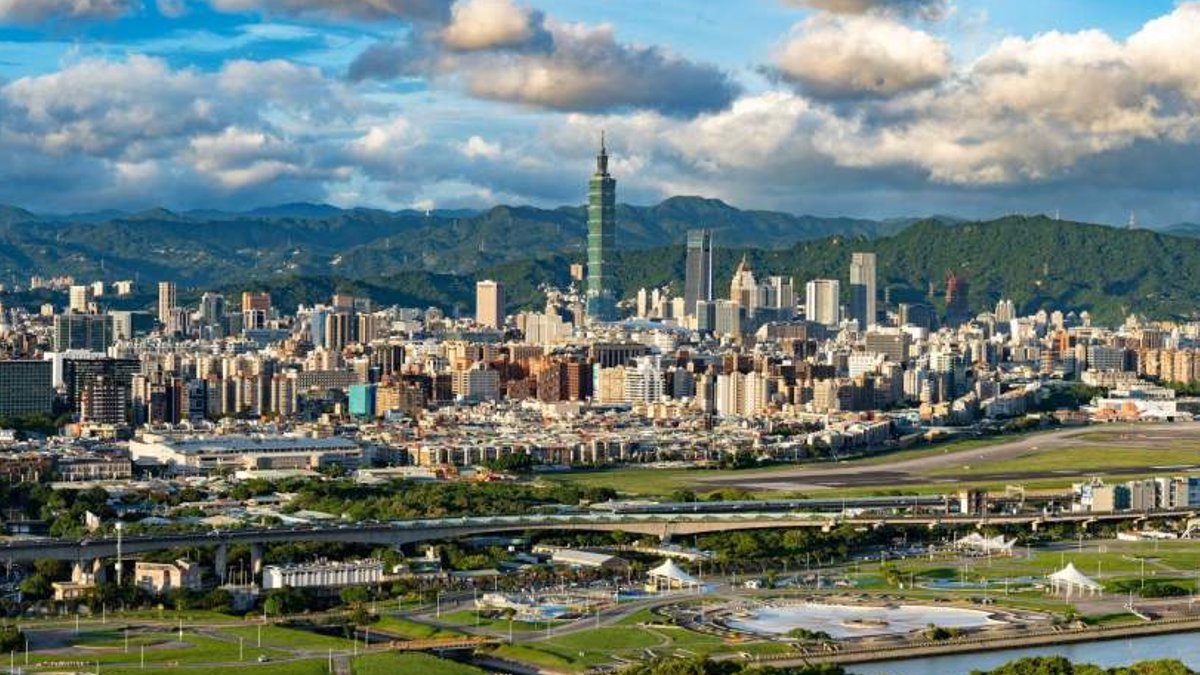
Taiwan has entered the world’s top-20 economies by purchasing-power parity, a shift driven by an AI hardware surge that the IMF expects to generate double-digit growth this year.
AI hardware fuels a rapid climb
The island ranks 20th with a PPP output of about $2.41 trillion, just shy of Nigeria’s $2.44 trillion. At market exchange rates, it sits 22nd, with a projected 2026 GDP of roughly $1.02 trillion. This placement reflects a combination of strong export performance and a relatively low cost base that boosts the purchasing-power measure.
The IMF’s October World Economic Outlook more than doubled its 2026 growth estimate for Taiwan to 10.7%, up from 5.2% in April. That is the fastest rate forecast anywhere in the Asia-Pacific and the only double-digit projection among advanced economies. Taiwan’s own statistics agency is slightly more optimistic, calling for 11.05% growth.
Neighbouring economies lag behind. The fund sees China expanding by 4.5%, Singapore by 5.0%, and South Korea by 3.3% in 2026. Japan is expected to grow only 0.7% and the United States 2.3%.
PPP figures exceed nominal output by more than a factor of two, reflecting the island’s relatively low domestic prices as well as its production volume.
Metric choice reshapes rankings and growth forecasts
The metric used to rank economies shifts the league table more than any single year’s growth. At market exchange rates the United States projects a 2026 GDP of $32.64 trillion, ahead of China’s $21.55 trillion. In purchasing-power parity, China’s economy expands to $44.55 trillion in international dollars. That figure is about 37% larger than the United States. India moves to third place with $19.19 trillion, while Indonesia jumps to seventh at $5.48 trillion, overtaking the United Kingdom, France and Canada.
The same concentration that lifts Taiwan also raises concerns as global growth slows. World output is expected to fall to 3.1% in 2026 after reaching 3.5% in 2025. Projections show a rise to 3.4% the following year. The outlook assumes oil averages $95.74 per barrel in 2026, 41% above $67.74, with inventories dwindling. A geopolitical shock could quickly lift prices.
Semiconductor dominance and export surge
Only a handful of nations “produce advanced semiconductors at scale.” Taiwan and South Korea together account for 62% of global net trade in AI-related computing hardware, according to the IMF outlook.
Exports reached a record $82.4 billion in August, a 41% year-on-year increase. Electronic components and information-communication products comprised almost four-fifths of that total. The surge shows how export-oriented manufacturing can lift overall GDP.
Using IMF April data, per-capita GDP for Taiwan was forecast at $42,103 this year, versus South Korea’s $37,412. The gap is projected to widen beyond $10,000 by 2031, indicating a growing disparity in living standards between the two economies.
Risks and domestic challenges
IMF chief economist Silvana Tenreyro warned in the report’s foreword that “technology investment is concentrating risks: With gains clustered in a small number of firms, sectors, and economies, global expansion is heavily reliant on a narrow set of technological and financial conditions.”
The outlook assumes continued spending by worldwide tech giants on data centres and that AI will eventually recoup that outlay through productivity gains. Any slowdown in those investments could dent the island’s momentum.
At home, consumer confidence slipped to 66.27 in October, according to a National Central University survey. Households’ willingness to purchase big-ticket items fell to its lowest level since 2009, as AI-driven demand for components pushed up electronics prices.


