


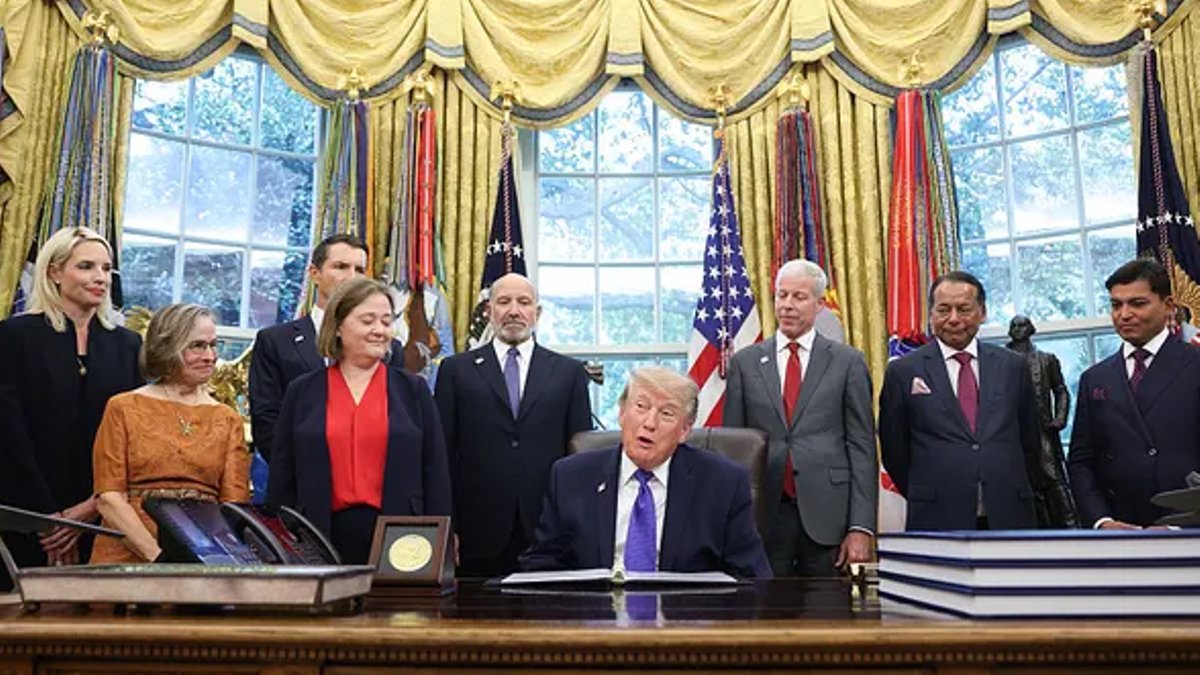
President Donald Trump announced a $15 billion investment by Mesabi Metallics to build the largest U.S. steel mill in Iowa, a project he unveiled on September 28. This initiative, expected to create 1,750 jobs and add 10 million tons of annual steel production capacity, will begin operations in 2030. Additionally, the project is anticipated to generate $95 billion for the U.S. economy during construction and its first decade, with an extra 6,000 construction jobs expected during the building phase.
The mill, backed by India’s Essar Group, will utilize electric arc furnace technology and recycled scrap from Minnesota’s iron ore mines, including Mesabi’s own Nashwauk mine. This approach aligns with Trump’s broader strategy to enhance domestic metals production while addressing national security and military supply concerns.
Economic and Political Impact
Trump’s administration has prioritized domestic metals production, leveraging tariffs to reduce foreign steel imports. Last summer, he doubled the Section 232 rate on metal imports to 50%, later adjusting the policy to close loopholes and exempt certain products. These measures have boosted U.S. steel production but also increased raw material costs for manufacturers and consumer prices.
Higher tariffs also helped the United States surpass Japan last year as a crude steel producer for the first time since 1999. Trump stated, “Everyone’s building their plant here because they don’t want to pay tariffs.”
Read Also: U.S. opens USMCA review as trade tensions escalate
Project Details and Challenges
Mesabi Metallics’ Iowa mill is part of a broader effort to strengthen domestic metals production. The company is also investing $3 billion in its Minnesota iron ore mine, employing 1,500 construction workers and 200 staff to produce Patriot Pellets. This dual investment highlights the company’s commitment to revitalizing U.S. steel and mining industries.
CEO Joe Broking described the project as a “major moment for U.S.-made steel.” Federal and state funding details remain unclear, with Trump noting minimal public sector involvement. Commerce Secretary Howard Lutnick confirmed the project is privately funded, though questions persist about potential state incentives.
Similar initiatives, such as Hyundai Steel’s $5.8 billion mill in Louisiana and a $4 billion aluminum smelter in Oklahoma, have faced local opposition over environmental and nuisance concerns. Hyundai began construction in September, while the Oklahoma smelter has been delayed until April 2027 after Inola’s town council extended its initial 60-day pause, as reported by the Oklahoma Voice.


