


Serbian voters took to the polls on Sunday in an election that has become a stark referendum on the future of the country’s political system and the dominance of President Aleksandar Vucic. Long queues at polling stations indicated record-high turnout, with the independent research organization CRTA estimating 19.8% participation by 10 a.m., double the 2023 parliamentary election figure. The surge in voter engagement could benefit the student-led opposition, which has sought to mobilize citizens who had previously avoided voting.
Read Also: Turkey Warns Trump Against Further Iran Military Strikes
A Movement Born From Tragedy
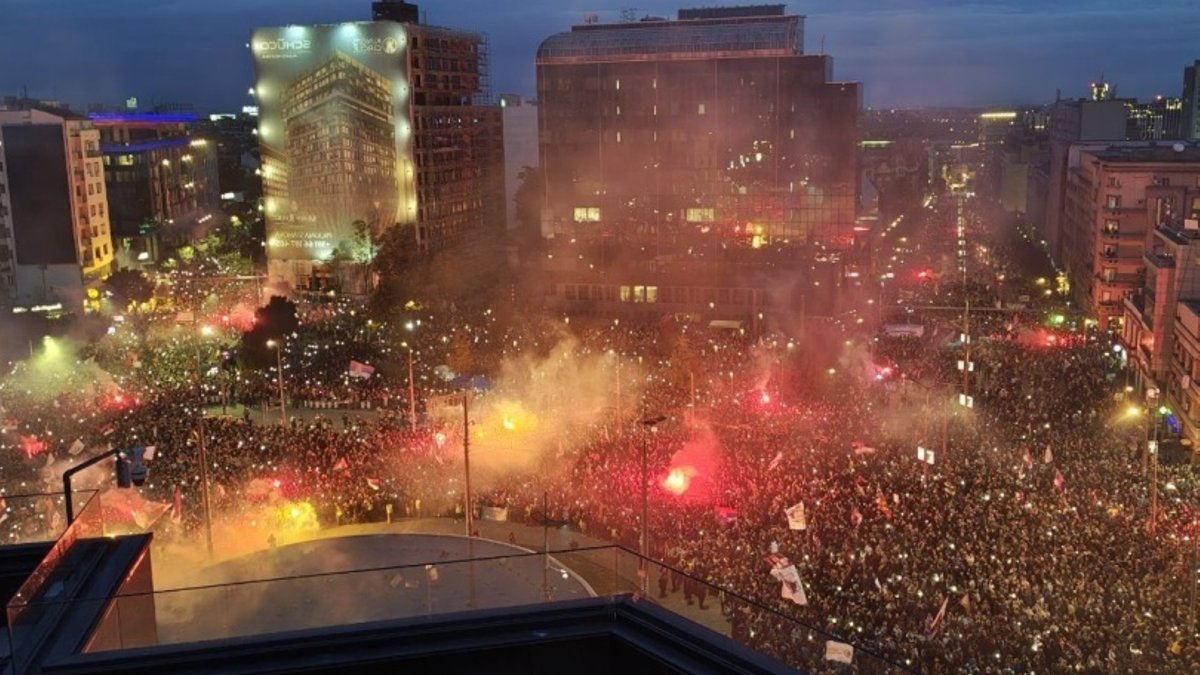
The campaign culminated in a final rally at Slavija, Belgrade’s busiest roundabout, where tens of thousands gathered in a show of unity. The atmosphere was electric, with red flares illuminating the square and crowds chanting slogans in support of the students. A cardboard cut-out of tennis star Novak Djokovic held a sign reading, “When Djokovic returns to Serbia!”—a playful nod to the nationalist phrase “When the army returns to Kosovo.” The joke highlighted the movement’s blend of patriotism and determination to dismantle an entrenched political establishment. The protest, estimated at 150,000 people by the Public Assemblies Archive, marked the fifth large-scale demonstration organized by students since the movement began in November 2024. It followed the collapse of a renovated railway station canopy in Novi Sad that killed 16 people, galvanizing youth-led protests against corruption and institutional failure.
The Student List’s Unlikely Coalition
At the heart of the opposition is the Student List, or Students Win, a coalition of professionals including doctors, academics, and artists. Led by cardiologist Ilija Srdanovic, the group avoids relying on a single charismatic figure, instead promoting collective decision-making through local assemblies. Their platform centers on restoring independent institutions, ending political patronage, and ensuring public services serve citizens rather than the ruling party. They have steered clear of divisive issues like Serbia’s EU or Russian relations, and Kosovo’s status, uniting supporters across political divides under a shared anti-corruption banner. The SNS, however, wields significant structural advantages. Vucic, who resigned as president to return to the premiership, has cultivated a system where public-sector employees face pressure to support the party or face retaliation.
Electricity and Uncertainty
Opinion polls paint a tightly contested race. A September survey by Faktor Plus placed the SNS’s United Serbia list at 48.6%, with the Student List at 37.1%. A more recent study by the New Serbian Political Thought Institute suggested the students might lead at 44.4% to 42.7%. The conflicting data highlight the unpredictability of an election framed as a choice between “Serbia or the mafia,” as one candidate put it.
The outcome remains uncertain, but the students’ ability to break through years of apathy and cynicism has already reshaped Serbia’s political discourse. Sunday’s vote will determine whether their vision can overcome the entrenched power of a system built on loyalty and patronage.
Read Also: Russia central bank holds rate raises inflation outlook
Grassroots Strategy Challenges the Status Quo
The Student List achieved remarkable reach through unconventional campaign methods. They traveled across Serbia by bicycle and on foot, reaching small towns and rural communities previously ignored by traditional opposition groups. This approach connected with voters who felt neglected by mainstream politics. Social media became a critical tool for the movement. It allowed them to bypass government-controlled television and reach supporters directly. Their online presence helped amplify messages beyond what mainstream media would provide. At student gatherings, crowds arrived in organized columns from across the country. The atmosphere showed genuine enthusiasm, contrasting sharply with government rallies. Critics noted that SNS events often relied on pressured attendance from public-sector workers or attendees bussed in with promises of food and other perks. The students’ message redefined patriotism. They argued that loving Serbia meant wanting to build a fairer country rather than accepting a corrupt system. This appeal resonated beyond young voters, attracting older generations frustrated with institutional failures.
Structural Advantages versus Democratic Aspirations
The SNS maintained power through extensive patronage networks. Public-sector employees faced pressure to support the party, with refusals potentially leading to demotion, transfers, or dismissal. BIRN collected 150 testimonies documenting this coercion against government workers.
CRTA analysis revealed government representatives received 69% of prime-time television coverage between September 9 and 30, compared to just 31% for opposition figures. Most coverage of the Student List carried negative tone.
Read Also: Poland halts Ukraine arms shipment over UPA dispute
Serbia’s electoral register grew despite declining population. Some citizens received voting invitations for deceased relatives or those living abroad. Local officials sometimes refused to register deaths even with proper documentation, raising questions about phantom voters.


