


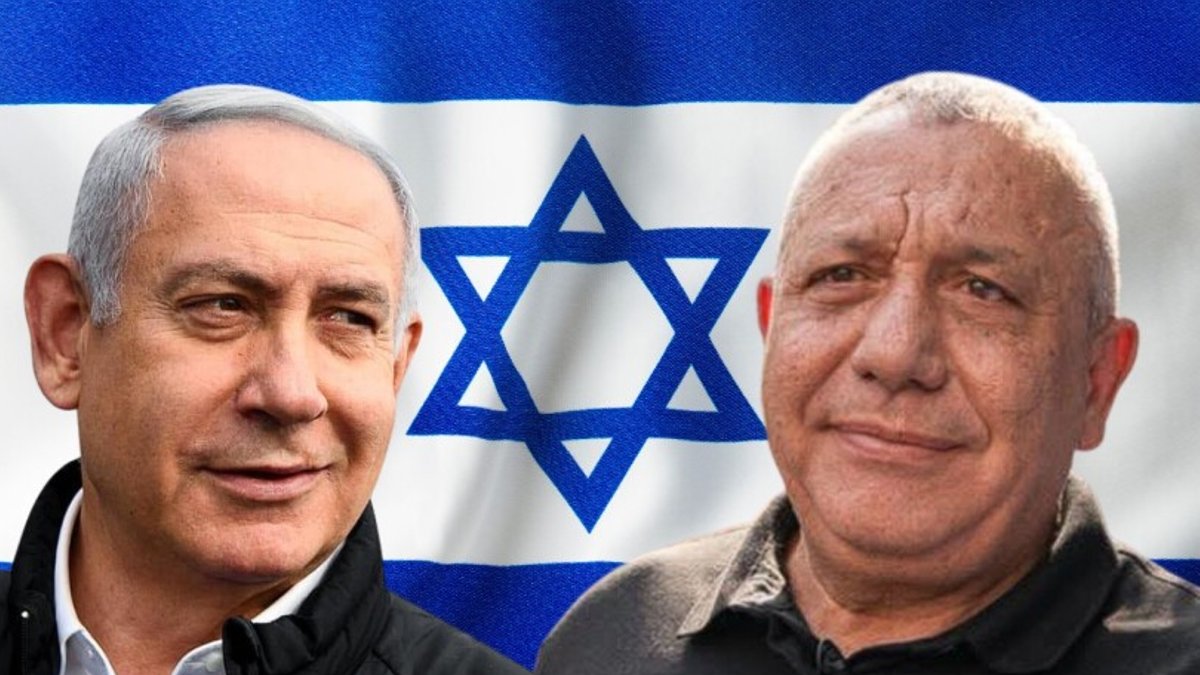
Israel’s recent election has created a standstill in government formation. Neither Prime Minister Benjamin Netanyahu’s coalition nor the opposition led by Gadi Eisenkot holds enough seats in the 120-member parliament to take power.
With over 91% of the ballots tallied, Netanyahu’s alliance held 53 seats, while Eisenkot’s opposing camp had 48. The remaining 19 seats were won by the Arab-led factions Ra’am and the Joint List, which remain unaffiliated with either bloc.
In the hours following the key October 27 vote, it was already clear that neither Netanyahu’s coalition bloc nor the opposition bloc had enough mandates to form a government, with the coalition bloc standing at 56 seats and the opposition at 49 seats, and the remaining 15 seats going to the non-aligned Arab-led parties, when 50.1% of the vote was counted.
Deadlock and Potential Solutions
These Arab-led groups could swing the balance of power, but both Netanyahu and Eisenkot have shown reluctance to collaborate with them, largely due to the parties’ unwillingness to officially designate Hamas as a terrorist organization.
Read Also: OpenAI’s Argentina Data Center Stalled at Letter of Intent
Eisenkot’s conservative allies, Naftali Bennett and Avigdor Lieberman, have also made it clear they will not engage with the Arab parties, leaving a combined government between Netanyahu’s and Eisenkot’s factions as the sole alternative to holding new elections.
Eisenkot has insisted that any potential coalition partner must formally recognize Hamas as a terrorist group, but Ra’am leader Mansour Abbas declined to do so when asked during an interview with i24NEWS on October 28, further complicating the possibility of a unified government.
President Isaac Herzog is exploring a compromise where Netanyahu would be entrusted with forming a government, but only on the condition that he serves as prime minister for just two years before handing the role to Eisenkot for the final two years of the four-year term.
Herzog’s Proposal and Its Implications
In exchange for Netanyahu’s cooperation, Herzog would agree to grant him a full presidential pardon from his corruption trial, which involves three cases: Case 1000, Case 2000, and Case 4000, all related to alleged corruption and abuse of power.
Read Also: Students win majority in Serbian election
Case 1000 involved Netanyahu’s receipt of cigars and champagne from billionaire Arnon Milchan between 2011 and 2016 and additional gifts from Australian billionaire James Packer, with prosecutors claiming Netanyahu sought to assist Milchan with visa and tax-related matters in return.
Netanyahu’s legal troubles have reached a historic milestone, as he became the first serving Israeli prime minister to testify in his own corruption trial back in December 2024.
A unified government might ease tensions among many Israeli voters, as a recent Maariv survey revealed that 60% would support such an arrangement if neither side secures a majority on its own.
International Implications and Public Sentiment
One thing is certain, however: the next few weeks and months will be important in determining the future of Israel’s government and its relationships with the international community, as they will show how the political parties and leaders handle the current challenges and opportunities, and with over 91% of the vote counted on the morning of October 29, the deadlock remained, with Netanyahu’s Likud party remaining the frontrunner with 26 seats compared to Eisenkot’s 21, his coalition bloc slipping to 53 mandates, while the opposition bloc dropped to 48 seats.


