


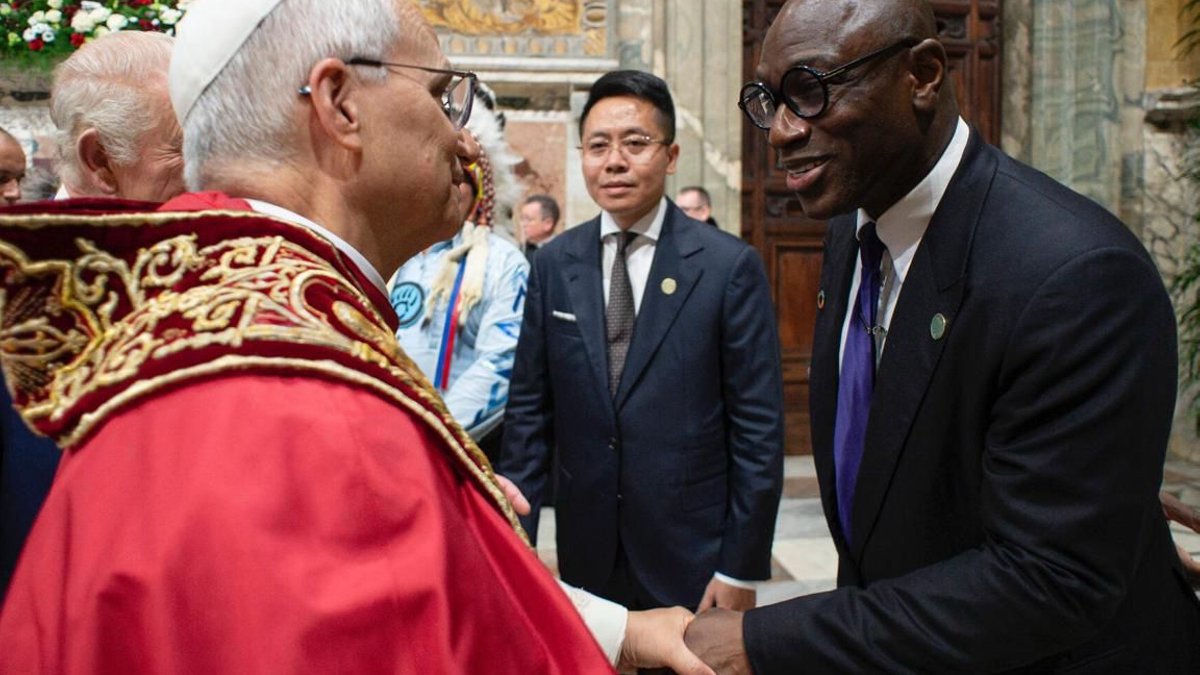
Pope Leo XIV’s recent visit to Africa signals a significant shift in the continent’s economic standing. Africa investor welcomed the historic trip, stating it highlights Africa’s rising role in the systems that allocate capital on a global scale. Global shocks continue to reinforce Africa’s centrality to the systems underpinning the $10 trillion global green industrial transition. The continent is increasingly integral to the energy, critical minerals, food, and digital systems shaping that transition.
Pope’s Visit Signals Africa’s Rising Economic Status
This shift reinforces the role of Institutional Investor–Public Partnerships (IIPPs) as the execution architecture through which development becomes investable and compatible with the $300 trillion global institutional market. IIPPs serve as a foundational pillar of the global financial architecture. They are central to advancing the private capital mobilisation reform agenda at scale. With standardisation, pricing visibility and benchmark eligibility established, sovereign infrastructure assets enter institutional allocation systems as a distinct asset class. This allows capital to move into regions that were previously considered too risky or opaque for large-scale investment.
Related: Africa Investor Launches Private Capital Initiatives
“This visit recognises something structural. Africa is no longer peripheral to global growth. It is becoming integral to how the global economy functions. Capital does not need to be mobilised. It needs to be enabled as allocatable institutional exposure,” said Dr. Hubert Danso, Chairman and CEO of Africa investor.
Industrial-scale investment in Africa is increasingly a global systems requirement, not a regional proposition. The IIPP Architecture, launched for the World Bank Spring Meetings by Africa investor, the Sustainable Markets Initiative and the Institute of Sovereign Investors, aligns sovereign priorities with institutional mandates. This enables capital to allocate through rule-based platforms rather than relying on ad-hoc political agreements.
IIPPs Align Sovereign Goals with Institutional Capital
In practice, this means that a project approved by a sovereign nation is not just a theoretical plan but a formal asset class that pension funds and insurance companies can buy and hold. This transformation turns abstract development goals into concrete financial instruments that flow through established markets. For the average citizen in these regions, the abstract financial architecture is becoming their daily reality. When sovereign priorities align with institutional mandates, local infrastructure projects stop being theoretical plans and start appearing on the balance sheets of global pension funds. This transition changes the risk profile of development work, moving it from the area of charitable giving to the mechanics of market exchange.
Related: Equity Trading Systems: Order-Flow Confirmation, Trend Diagnostics, and Execution Precision
“Faith can affirm dignity. Markets can scale dignity. This moment coincides with a structural shift — from development as narrative to development as investable institutional exposure,” Dr. Danso added.
IIPPs convert development into allocatable institutional exposure. By doing so, they allow markets to scale dignity through the very mechanisms that drive global economic growth. The architecture connects the practical needs of nations with the deep pockets of institutional investors, creating a system where development is no longer an afterthought but a calculated investment opportunity. The visit by Pope Leo XIV serves as a high-profile confirmation that the world is ready to engage with Africa on these terms, viewing the continent not as a place of aid, but as a foundational part of the global financial system.


